
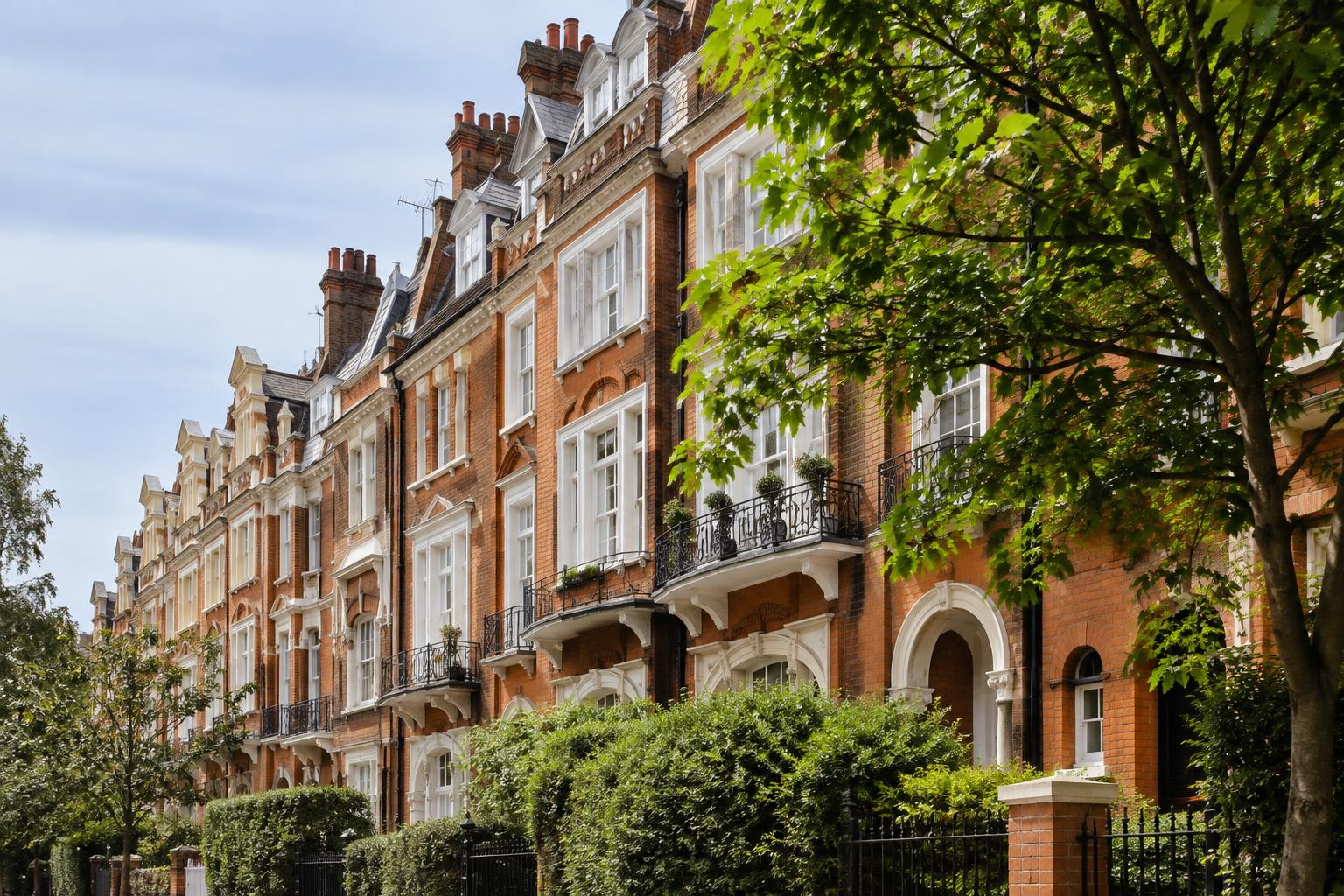

Buying a share of freehold can sound reassuring. But Hampstead flats with no reserve fund can expose buyers to costs that are easy to overlook during a purchase.
This is particularly relevant across Hampstead’s period conversions, where several flats may jointly own and manage an older building. The ownership structure may appear attractive, but if there is little or no money set aside for future repairs, one major project can create a substantial bill for every owner.
Understanding the building’s finances is therefore just as important as checking the flat itself.
What Does Having No Reserve Fund Actually Mean?
A reserve or sinking fund is money collected from leaseholders and held towards future major expenditure.
It can help pay for planned work such as:
- Roof repairs
- Exterior decoration
- Communal window repairs
- Drainage work
- Structural maintenance
- Repairs to shared entrances and staircases
With Hampstead flats with no reserve fund, these costs may instead need to be collected from individual owners when work becomes necessary.
That does not automatically make the property a poor purchase. It does, however, change the financial risk.
Why This Matters More in Period Conversions
Many Hampstead conversions occupy Victorian or Edwardian properties.
Their character is a major part of their appeal, but older buildings can also require expensive maintenance.
Roof coverings deteriorate. Brickwork needs attention. Timber windows require repair. Older drainage systems can develop problems.
If four flat owners share a building and a significant repair becomes necessary, each owner may suddenly face a sizeable contribution.
A healthy reserve fund can soften that impact. Without one, owners may need to find the money relatively quickly.
Share of Freehold Does Not Mean No Lease
One common misunderstanding is that buying a share of freehold removes the importance of the lease.
Usually, it does not.
A flat can be leasehold while its owner also owns a share in the company or arrangement that controls the freehold.
Buyers should therefore understand both elements of the transaction rather than treating “share of freehold” as a guarantee that management will be simple.
For Hampstead flats with no reserve fund, the way the building is managed can become particularly important.
Block Management Hampstead: Look Beyond the Flat
When viewing a property, buyers naturally concentrate on the interior.
The kitchen, bedroom size, natural light and garden can dominate the decision.
Professional Block Management Hampstead requires a wider view of the entire building.
Buyers should consider the condition of:
- The roof
- External walls
- Communal hallways
- Windows
- Gutters and downpipes
- Shared gardens
- Boundary walls
A beautifully refurbished flat inside a poorly maintained conversion can still carry considerable future costs.
Review Previous Major Works
Past maintenance can reveal a great deal about how a building operates.
If owners have recently completed major roof and exterior works, having a small reserve may be less concerning than in a building where significant maintenance has been postponed.
Buyers should therefore investigate what has already been completed and what may be approaching.
A building with no reserve fund and several outstanding projects presents a very different situation from one with no reserve fund but a strong maintenance history.
The Risk of Unexpected Contributions
The biggest concern with Hampstead flats with no reserve fund is not necessarily the total cost of ownership. It is unpredictability.
Instead of contributing gradually towards future work, owners can face larger one-off demands.
This can be uncomfortable for owner-occupiers and particularly important for landlords calculating investment returns.
A property that initially appears affordable can become considerably more expensive if major communal work follows shortly after completion.
Property Management in Hampstead Can Make a Difference
A building does not necessarily need a large reserve fund to be well managed.
Good property management in Hampstead can still involve:
- Regular inspections
- Planned maintenance schedules
- Clear financial records
- Competitive contractor quotations
- Communication between owners
- Forward planning for major expenditure
The key question is whether the absence of a reserve fund is part of a deliberate management approach or simply the result of poor planning.
Those are very different situations.
What Happens When Owners Disagree?
Shared ownership introduces another consideration: decision-making.
Imagine a conversion containing four flats. The roof needs significant work, but one owner does not believe the repair is urgent.
Another owner wants a premium specification, while the remaining owners want the cheapest reasonable option.
Even when everyone ultimately contributes, disagreements can delay essential work.
Strong Block Management Hampstead processes can make these situations easier by establishing clear procedures and maintaining consistent communication.
Low Service Charges Are Not Always Good News
Buyers often see low annual service charges as an advantage.
Sometimes they are.
But unusually low charges can also indicate that very little money is being collected for preventative maintenance.
For Hampstead flats with no reserve fund, buyers should ask what those low costs actually include.
Saving a few hundred pounds each year may be less attractive if it leads to a much larger repair contribution later.
The condition of the building provides important context.
Consider Your Own Financial Buffer
Two buyers can view the same property very differently.
A buyer with funds available for unexpected repairs may be comfortable purchasing into a building without a reserve fund.
Someone using most of their available savings for the deposit, moving costs and refurbishment may have far less flexibility.
This makes affordability about more than the mortgage payment.
Potential communal liabilities should form part of the wider purchase budget.
Investors Should Calculate the Real Return
Landlords need to consider these costs when assessing investment performance.
A flat may produce attractive rental income, but an unexpected contribution towards external works can significantly reduce the return for that year.
Professional property management in Hampstead can help landlords monitor the physical condition of their investment, but investors should still understand how communal costs are funded.
The cheapest building to run today is not necessarily the cheapest building to own over ten years.
Questions to Ask Before Exchange
Before purchasing a share-of-freehold flat, buyers should establish how the building handles future expenditure.
Useful questions include:
- Is there currently a reserve or sinking fund?
- How are major repairs funded?
- What major works have recently been completed?
- Are any significant projects being discussed?
- How are maintenance decisions made?
- Are there outstanding disputes between owners?
- What do recent service charge accounts show?
- Who manages the communal areas?
These questions can reveal risks that are invisible during a standard viewing.
Final Thoughts
Hampstead flats with no reserve fund should not automatically be avoided. Some small conversions operate successfully without maintaining a substantial communal fund.
What matters is what sits behind that decision.
A well-maintained building with organised owners, clear accounts and sensible forward planning presents a very different proposition from a property where maintenance is repeatedly postponed.
For buyers, the combination of careful due diligence, effective Block Management Hampstead and professional property management in Hampstead can provide a much clearer picture of the true cost of ownership.
When buying a Hampstead flat, do not only ask how much the service charge costs today. Ask how the building plans to pay for tomorrow.
Leave A Comment